We have compiled a list of manufacturers, distributors, product information, reference prices, and rankings for Lithium iron battery.
ipros is IPROS GMS IPROS One of the largest technical database sites in Japan that collects information on.

Lithium iron battery - List of Manufacturers, Suppliers, Companies and Products

Lithium iron battery Product List

1~4 item / All 4 items

Displayed results

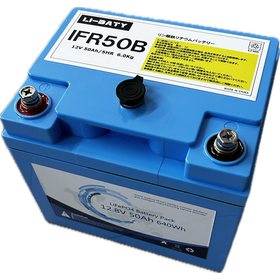
Replacement lithium iron phosphate battery from lead (12V/24V/48V)

Would you like to replace your lithium battery without changing your charger?

Lead batteries have a short cycle life and gradually experience capacity decline, requiring management and maintenance. Would you consider switching to lithium batteries to reduce maintenance and replacement costs? <Advantages compared to lead-acid batteries> - Lightweight: Can be reduced to less than half the weight of a standard lead battery. - Long operating time: Can maintain high voltage for a longer period, resulting in extended operating time until the equipment's cutoff voltage. - Reduced replacement frequency: Durable against deep discharges, significantly extending cycle life compared to lead batteries. - Easy storage: Low self-discharge means no need for recharging after vacations or equipment maintenance. - Resistant to temperature variations: Can be used in temperature environments ranging from 5°C to 40°C. - Cost control: Total costs can be reduced. - No need for equipment changes: The main equipment and surrounding devices such as chargers can be used as is.

  • Lithium-ion battery

Added to bookmarks

Bookmarks list

Bookmark has been removed

Bookmarks list

You can't add any more bookmarks

By registering as a member, you can increase the number of bookmarks you can save and organize them with labels.

Free membership registration

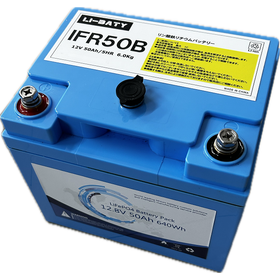
From Lead to Lithium: A Battery Replacement Solution with Reduced Initial Investment

No need to replace the charger when switching from lead batteries! Minimize equipment investment and achieve the long lifespan and high efficiency of lithium.

Existing chargers can be reused as is. The cost of replacing with a lithium-specific charger and the electrical work for installation will be reduced to "zero." A smooth transition utilizing existing infrastructure is possible. No modifications needed on the vehicle side (plug-in replacement). By customizing the shape and voltage to match existing lead batteries, operations can start simply by swapping them out without changing the circuit design on the vehicle side. Extending lifespan reduces the "number of replacements." With a cycle life more than three times that of lead batteries, future battery replacement costs can be significantly minimized. Support for small lots and shortest delivery times. Replacement can be done from just one unit. Instead of changing all vehicles at once, it is possible to first trial with one unit and then gradually proceed with lithium conversion according to your budget. "Fail-proof" implementation support through domestic in-house inspection. Vehicle specifications are checked in advance, and shipments are made with optimal settings. Hidden costs due to post-implementation troubles are thoroughly eliminated.

  • Lithium-ion battery

Added to bookmarks

Bookmarks list

Bookmark has been removed

Bookmarks list

You can't add any more bookmarks

By registering as a member, you can increase the number of bookmarks you can save and organize them with labels.

Free membership registration

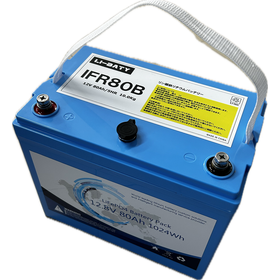
[Research Material] The Global Market for Lithium Iron Phosphate Batteries

World Market for Lithium Iron Phosphate Batteries: Up to 3.2 V, 3.2 V to 12 V, 12 V to 19 V, over 19 V, electric vehicles, power ...

This research report (Global Lithium Iron Phosphate Batteries Market) investigates and analyzes the current status and outlook for the global lithium iron phosphate battery market over the next five years. It includes information on the global overview of the lithium iron phosphate battery market, trends of major companies (sales, selling prices, market share), market size by segment, market size by major regions, and distribution channel analysis. The segments by type in the lithium iron phosphate battery market cover up to 3.2 V, 3.2 V to 12 V, 12 V to 19 V, and above 19 V, while the segments by application include electric vehicles, power tools, medical, wind power, home appliances, and others. The regional segments calculate the market size of lithium iron phosphate batteries by dividing them into North America, the United States, Europe, Asia-Pacific, Japan, China, India, South Korea, Southeast Asia, South America, the Middle East, and Africa. The report also includes the market share of major companies in the lithium iron phosphate battery sector, product and business overviews, and sales performance.

Added to bookmarks

Bookmarks list

Bookmark has been removed

Bookmarks list

You can't add any more bookmarks

By registering as a member, you can increase the number of bookmarks you can save and organize them with labels.

Free membership registration

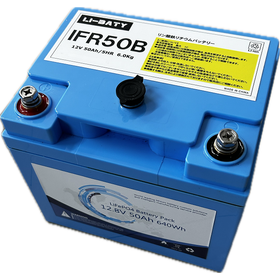
Reduction of charging time: Benefits of switching from lead batteries to lithium.

Eliminate waiting for charging: Switching from lead batteries to lithium significantly increases operating time! Change '8 hours of overnight charging' to '1 hour of charging during breaks'!

Overwhelming charging speed (supports fast charging) Compared to lead batteries, the ability to accept electricity (charging acceptance) is extremely high, allowing for full charging in a short time. You can secure the power needed for the next operation during brief moments like lunch breaks or shift changes. Damage-free "topping up" charging It allows for "frequent charging," which was a cause of reduced lifespan for lead batteries. There is no memory effect, enabling a shift to operations where you can charge during gaps without worrying about battery levels. High output maintained until the end of discharge While lead batteries experience power reduction as the charge decreases, lithium batteries maintain stable voltage until the very end. Strong operation and elevation are possible right up until just before charging. Effective use of existing charging infrastructure With a unique BMS (Battery Management System), charging efficiency is improved while utilizing existing lead battery chargers. You can introduce "fast charging" without significantly changing the equipment. Support for complete automation of charging operations Because charging time is short, it pairs excellently with automatic charging systems and contactless power supply. It is ideal for building a "non-stop site" that does not rely on human intervention.

  • Lithium-ion battery

Added to bookmarks

Bookmarks list

Bookmark has been removed

Bookmarks list

You can't add any more bookmarks

By registering as a member, you can increase the number of bookmarks you can save and organize them with labels.

Free membership registration